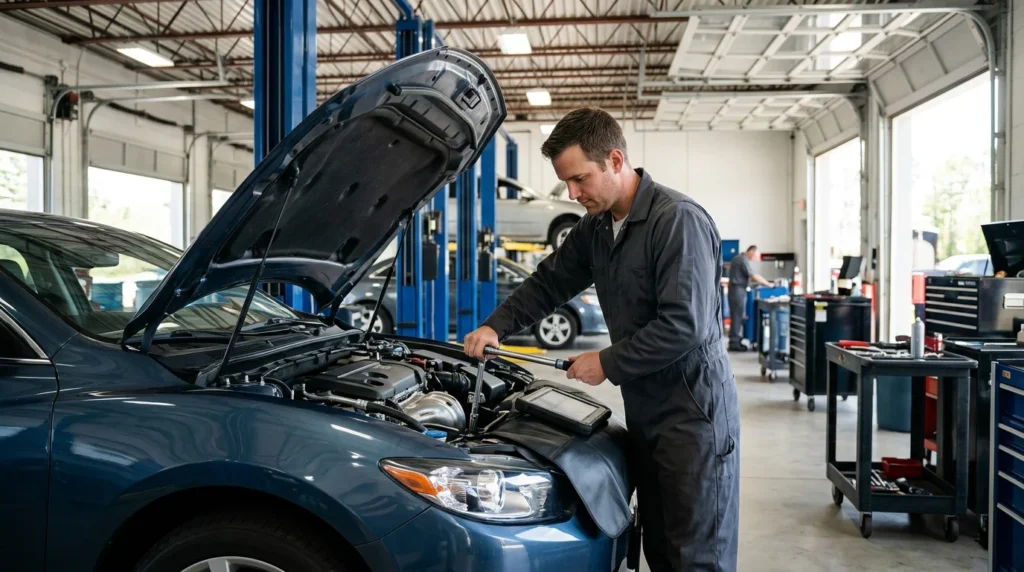
Quick answer: Choose a reliable auto repair shop in Buford, GA by confirming you’ll get a written estimate, clear authorization steps, and an explanation of how the diagnosis will be performed before parts are replaced. Ask what parts options are available, what warranty applies to parts and labor, and how they document findings. A good shop can show test results and communicate priorities for safety-critical repairs.
What a Good Shop Visit Should Look Like
A dependable shop starts with a short interview about symptoms (when it happens, hot/cold, speeds, warning lights) and then confirms the issue with a test drive or scan—without guessing. You should get a written estimate that separates diagnosis from repair, lists parts and labor, and spells out what could change if the technician finds related damage.
Look for a place that can explain the “why,” not just the “what.” For example, a shop might show freeze-frame data for a check-engine light, point out uneven brake pad wear, or explain how a weak battery can cause random electrical glitches. If you’re comparing options, checking the services and scheduling details for an auto repair shop Buford GA can help you see whether the process feels organized and transparent.
Good communication also means you’ll be asked before any additional work is done. If a shop moves forward on extra repairs without approval, that’s a red flag.
Quick Evaluation Checklist (Call or Counter)
Use this list while you’re calling or visiting shops so you can compare answers quickly:
- Written estimate: Will the estimate itemize parts, labor, shop supplies/fees, and taxes separately?
- Diagnostic fee policy: Is diagnosis billed separately, and is any portion applied to the repair if you proceed?
- Warranty terms: What warranty is offered on parts and labor, and how is a comeback handled?
- Parts options: Can you choose OEM vs aftermarket vs remanufactured, and will they explain the trade-offs?
- Documentation: Will they note test results and findings on the invoice and/or provide photos when relevant?
- Approval process: Do they require your authorization (text/email/phone) before additional work?
- Timeline: When will they update you, and what happens if parts are delayed?
Questions to Ask Before Approving Repairs
These questions help you spot careful diagnostics versus parts-swapping:
- “What test results point to that part?” (codes, measurements, visual findings)
- “What else could cause the same symptom, and how did you rule it out?”
- “Is this repair urgent for safety or can it be scheduled?”
- “Are you replacing the root cause or a symptom?” (example: fixing a leak that ruined a belt)
- “What parts are you using (OEM/aftermarket/reman), and why?”
- “What’s the warranty on parts and labor, and what’s the process if the issue returns?”
- “Can I see the old part?” (not always possible if a core return is required)
Ask for the estimate and authorization in writing (text or email is fine) so you have a clear record of what you approved.
Red Flags, Urgent Safety Signs, and Georgia-Specific Tips (General Guidance)
Red flags that usually mean you should slow down or get a second opinion:
- Vague recommendations like “needs a tune-up” without listing specific parts/tests
- One-line quotes that don’t separate parts and labor
- Pressure to approve immediately without showing findings
- Changing the plan and price without asking first
- Replacing major parts without basic checks (battery/cables before alternator, leak checks before sensors)
Urgent safety signs that typically justify same-day attention:
- Brake pedal sinking, grinding, or a brake warning light
- Steering pull, clunks over bumps, or noticeable looseness in the wheel
- Tire cords showing, sidewall bubbles, or repeated rapid air loss
- Engine overheating, steam, or a temperature gauge pegging hot
- Flashing check-engine light (often indicates a severe misfire that can damage the catalytic converter)
Georgia/Buford consumer tips (general guidance) to make the process smoother:
- Ask for written estimates and written authorization before work begins, and keep copies of invoices and approvals.
- If the repair relates to emissions or a check-engine light, keep the paperwork showing what was tested and replaced; it helps if the light returns and you need to track what changed.
- Ask how warranty work is handled if you’re traveling within Georgia (for example, whether the shop needs to re-diagnose before replacing parts under warranty).
- Request that any “needs attention soon” items be listed separately from “must fix now,” so you can plan repairs around commuting and school/work schedules common in the Buford area.
If you want to contact Team Ryan Automotive, a practical next step is to call with a short script: “I’m having [symptom] on my [year/make/model]. What is your diagnostic fee policy, do you provide a written itemized estimate, and how do you handle approval for additional work?” Then request the estimate and warranty terms in writing before authorizing repairs.