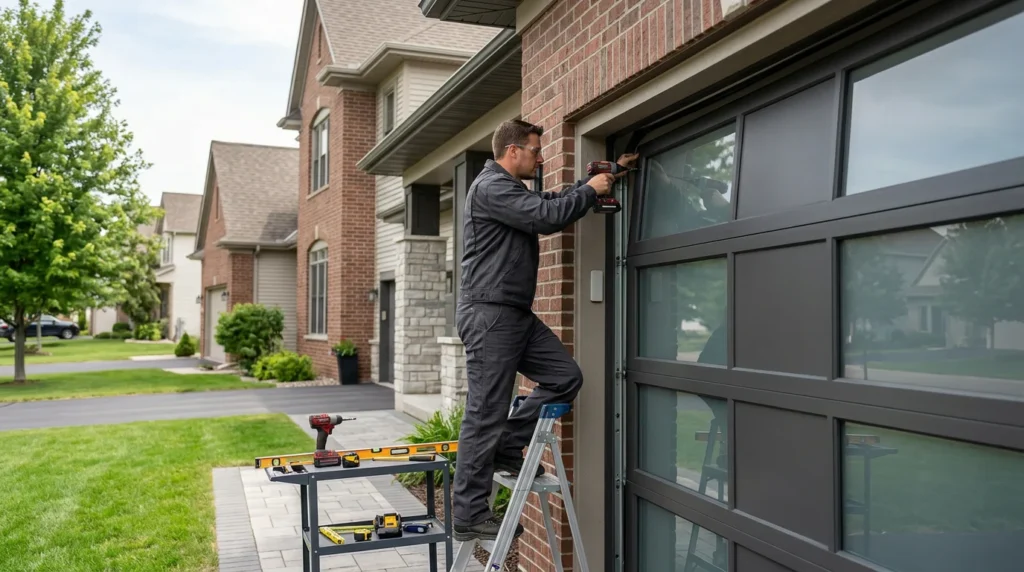
Quick answer: Expert garage door service means a technician can accurately diagnose the problem, repair it safely, and tune the whole system so it runs smoothly afterward. That usually includes inspecting springs and cables, checking track alignment, testing safety sensors and auto-reverse, balancing the door, and confirming the opener is matched to the door’s weight. It also means recommending replacement only when parts are truly worn or unsafe.
What “Expert” Service Usually Includes
A good service call covers more than the noisy hinge or the remote that stopped working. An experienced tech typically inspects the full door system—springs, cables, rollers, tracks, hinges, bearings, and the opener—because one worn part can create stress everywhere else. If you’re comparing options, look for a scope that reads like a system check, not a single quick fix. Many homeowners start by calling expert garage door services in Woodbury when they want that whole-system approach.
Expect a safety-focused routine: disconnecting power when needed, securing the door before working on high-tension parts, and testing the auto-reverse and photo-eye sensors at the end. A proper tune-up often includes tightening hardware, lubricating the right points (not the tracks), checking door balance, and verifying the opener’s force and travel limits. The goal is a door that moves evenly, seals well, and doesn’t strain the opener.
Signs You Need Repair Now (Not Later)
Some symptoms are more than annoying—they can signal a door that’s close to failing. A door that feels unusually heavy, won’t stay halfway open, or slams down can indicate spring issues. Frayed cables, a crooked door, or a gap on one side can point to cable or track problems that can worsen quickly.
Other red flags include grinding or popping sounds, rollers that wobble, bent tracks, and a door that reverses unexpectedly. If the opener hums but the door doesn’t move, or the trolley disengages repeatedly, the issue could be a stripped gear, a broken spring (the opener can’t lift the weight), or a misadjusted limit setting. Stop using the door if you see a broken spring or damaged cable; those parts store significant energy and aren’t a DIY repair.
Repair vs. Replace: Practical Decision Rules
Repair makes sense when the door is structurally sound and the problem is isolated: worn rollers, a tired opener gear, misaligned tracks, failing sensors, or a single damaged panel on some door styles. Replacing key wear parts together can be smarter than piecemeal fixes—for example, pairing new rollers with a track alignment and hinge check, or replacing both springs as a matched set on a two-spring system.
Replacement is usually the cleaner option when the door is badly rusted, cracked, warped, or repeatedly coming off track, or when multiple major components are near end-of-life at the same time. If you’re upgrading, consider insulation (quieter operation and better temperature stability), wind reinforcement if your area needs it, and an opener sized for the door’s weight. A typical modern opener choice is belt-drive for quiet garages, chain-drive for value, and wall-mount for ceiling space—assuming the door and torsion setup support it.
If you want a local pro to diagnose the full system and recommend the safest fix, AA Garage Door LLC is a solid place to get help.