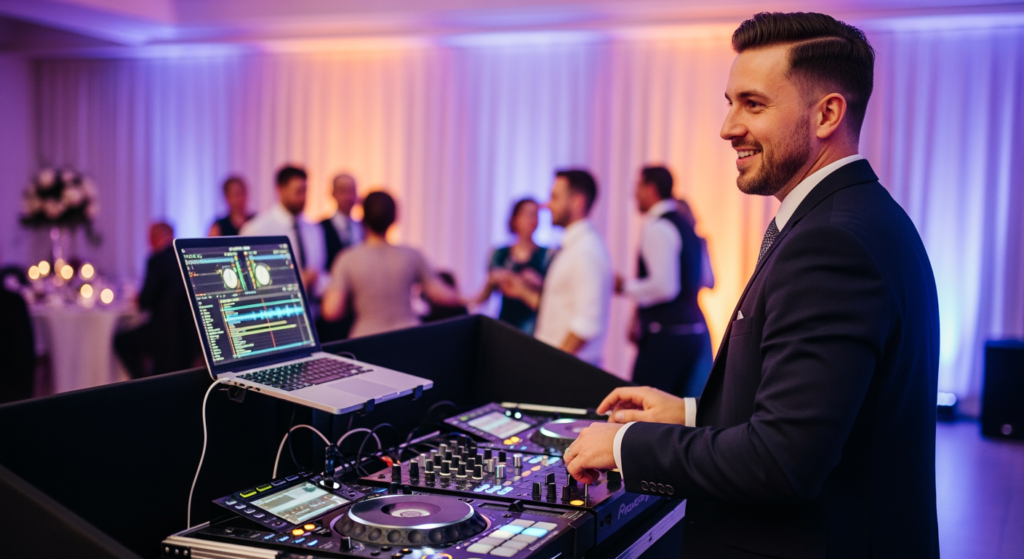
Quick answer: Choose a wedding DJ by checking their mixing style (not just a playlist), how they read the room, and whether they can smoothly handle key moments like entrances, speeches, and the first dance. Confirm they’ll tailor music to your “must plays” and “do not plays,” bring reliable sound and lighting, and have a clear backup plan. A short call should confirm personality fit and clear communication.
Start With Style, Not a Song List
The best DJs aren’t just pressing play—they’re managing energy, timing, and transitions so the night feels effortless. When you’re comparing wedding djs, ask how they typically build a set: do they mix live, blend genres, and adjust pace based on who’s on the floor? A good DJ can move from Motown to current pop without jolting the vibe, and they’ll know when to keep a groove going versus when to switch it up.
It also helps to decide what you want the dancefloor to feel like. Some couples want club-style mixing and big drops; others want singalongs and familiar classics. Share a few examples of songs you love and the general mood you’re after, then listen to how the DJ responds. If they ask smart questions about your crowd and venue, that’s usually a good sign.
Pin Down the Moments That Matter
A wedding DJ is often the unofficial timekeeper. Confirm they can handle the “non-dancing” parts cleanly: ceremony music cues (if needed), cocktail hour, grand entrance, background music during dinner, speeches, cake cut, and first dance. The difference between a smooth night and a clunky one is usually the transitions—fading mics properly, keeping volumes comfortable, and not letting the room go awkwardly silent.
Ask how they work with your venue and coordinator. Do they arrive early for setup and sound checks? Will they coordinate with photographers for key shots? A DJ who can calmly guide guests through announcements—without sounding like a game-show host—helps everyone relax and enjoy the schedule.
Get Clear on Requests, Boundaries, and Crowd Reading
Most couples have a few “must plays,” a handful of “please don’t,” and a lot of songs they’re fine with either way. Put those in writing and ask how the DJ handles guest requests. A good approach is: accept requests, filter them through your preferences, and use them only when they fit the moment.
Crowd reading matters more than any pre-made playlist. Ask what they do if the dancefloor empties, how they handle mixed-age groups, and whether they’re comfortable with different genres (R&B, indie, pop-punk, Afrobeats, country, disco, etc.). You’re looking for someone who can pivot quickly without making it feel reactive or random.
Confirm Practical Details and Backup Plans
Before you book, confirm what’s included: sound system size, wireless microphones, lighting (and whether it’s subtle or “party”), setup footprint, and whether they need a table, power, or a specific load-in route. Also ask about music for separate spaces—like a ceremony area and reception room—and whether they charge for extra speakers.
Reliability is huge. Ask about backup equipment (laptop/controller, cables, speakers) and what happens if the DJ is ill. A clear contract should cover arrival time, overtime rates, and how payments work so there are no surprises later. For local help choosing and booking the right fit, SpinSisters LTD can walk you through options and expectations.