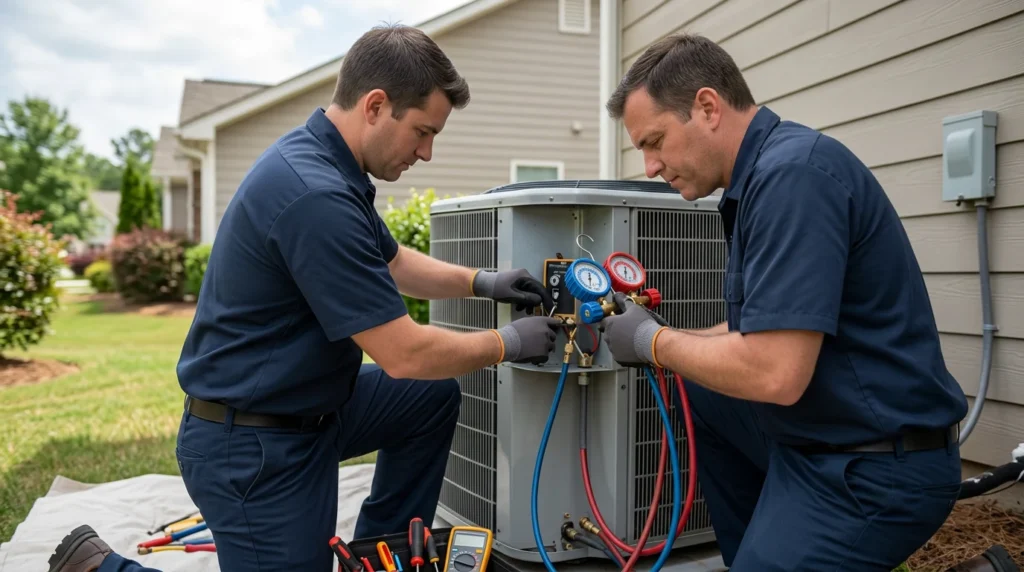
Quick answer: Most homes in Walton County typically do well with AC maintenance once a year, ideally in spring before the first long heat waves. If your system runs nearly nonstop, has a history of breakdowns, or you have pets or allergies, a second check in fall can help. Maintenance can reduce surprise failures and improve comfort, but results depend on system condition and the quality of the work performed.
A Practical Maintenance Schedule for Walton County Homes
For a typical single-family home, one professional tune-up per year is a solid baseline. Spring is the sweet spot because it gives you time to address small issues before the system is stressed by hot, humid afternoons and long run times.
If your AC is older, you’ve had repeated service calls, or your outdoor unit is exposed to heavy pollen and yard debris, two visits a year can be a reasonable upgrade. Think of it as a “pre-summer” and “post-summer” check so wear from the season doesn’t quietly carry over. If you’re comparing options locally, this page on ac maintenance Walton County GA outlines what a maintenance visit typically covers.
Even with professional service, plan on changing filters regularly. Many 1-inch filters need attention about every 1–3 months, while thicker media filters often last longer. The right interval depends on dust, pets, and how much the system runs.
Walton County Timing: When to Get on the Schedule
A practical target in Walton County is to book maintenance in early-to-mid spring, before the calendar fills up and before the first stretches of consistently warm afternoons. You don’t need a perfect date; you want the system checked before it’s running for hours at a time.
Schedule earlier if you notice the first sustained weeks where daytime highs are regularly in the 80–90°F range, pollen is coating the outdoor unit and filters faster than usual, or indoor humidity starts feeling sticky even when the thermostat says it’s cool. Those are common signals that summer-style runtime is arriving and small airflow or drainage issues can show up fast.
What a Real Maintenance Visit Should Include
Good maintenance is more than “hose off the outdoor unit.” A technician should verify airflow, temperature split across the coil, and safe electrical operation. They’ll also inspect the condensate drain (a common summer nuisance), check the blower components, and look for signs of duct leakage or return-air restrictions that can make rooms feel muggy.
Here’s a simple checklist you can use to keep the visit concrete:
- Airflow and temperature split (ΔT) across the indoor coil
- Electrical checks: capacitor/contactor condition and amp draw as appropriate
- Condensate drain test and pan/float switch inspection (if present)
- Indoor/outdoor coil condition and cleaning needs
- Thermostat operation and basic calibration/placement concerns
On the outdoor unit, cleaning the condenser coil and confirming the fan motor operation can help reduce strain, but outcomes vary with equipment age and existing wear. Refrigerant should be checked in a way that makes sense for the system’s design; adding refrigerant without discussing leak possibilities is a red flag.
How Maintenance Helps You Avoid Expensive Breakdowns
Many major failures start as small, detectable problems: a weak capacitor that makes the compressor struggle, a clogged drain that triggers a safety shutoff, or a dirty coil that pushes pressures and temperatures out of range. Catching those early can help protect the compressor and reduce wear on motors and controls, especially when the system is otherwise in decent shape.
Maintenance can also support comfort. Better airflow and clean heat-transfer surfaces often lead to steadier temperatures and less “clammy” air, but the improvement depends on the underlying design (ductwork, sizing) and how thorough the maintenance actually is.
Next-step checklist: before the visit, replace/clean your filter (or have a spare ready), clear leaves and clutter from around the outdoor unit, and write down any symptoms (noises, odors, hot rooms, humidity). When you call any contractor, ask what measurements they’ll record (ΔT, basic electrical readings, drain test results) and request brief notes on what was found, what was corrected, and what should be monitored next.